
The research behind what we do
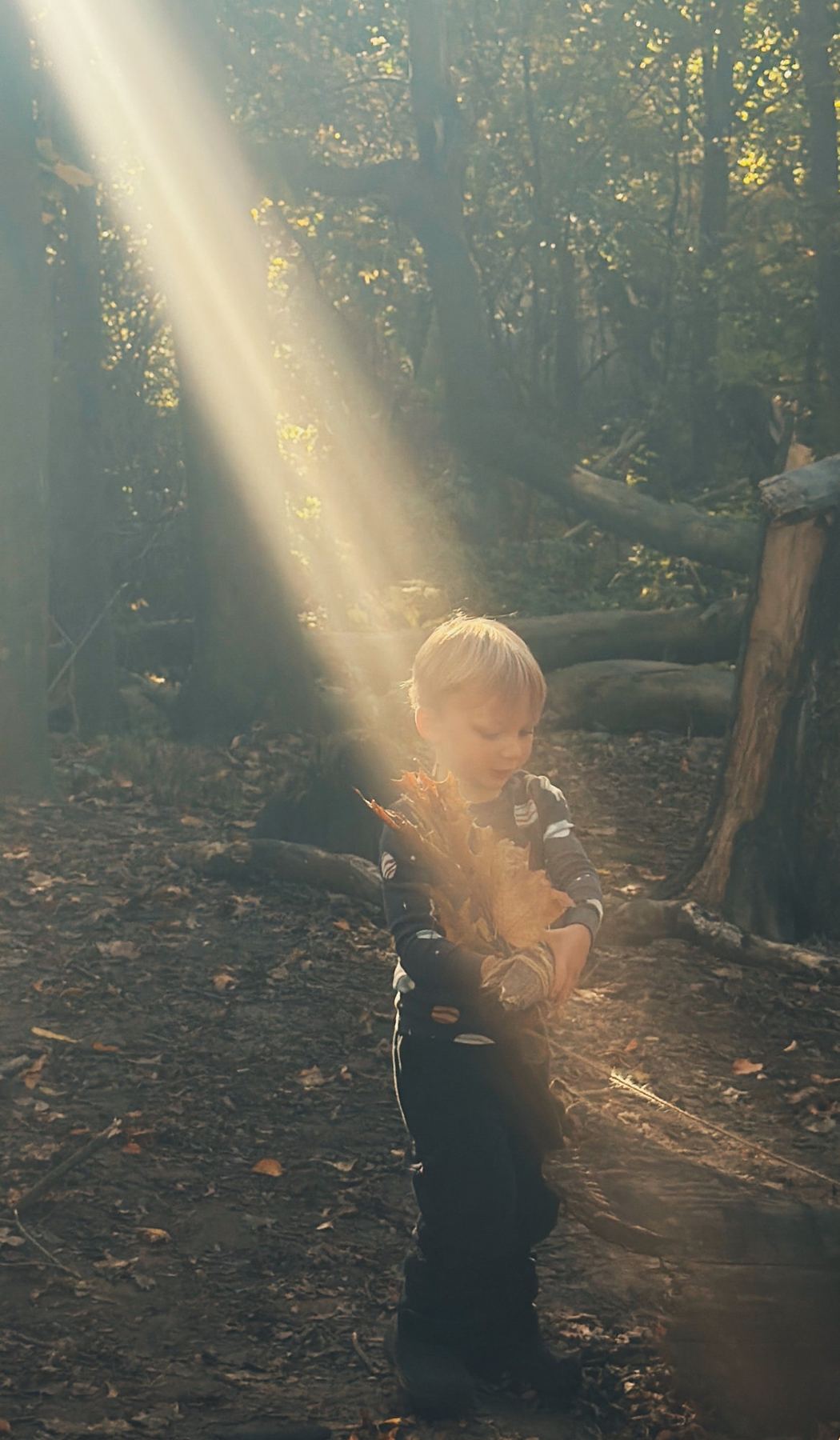
Watch a child in the forest for a while. They climb, dig, wonder, negotiate, rest. None of it looks like a lesson, and all of it is learning. What we’ve seen in the ravine for years, research keeps confirming. We hold it all through the elements.
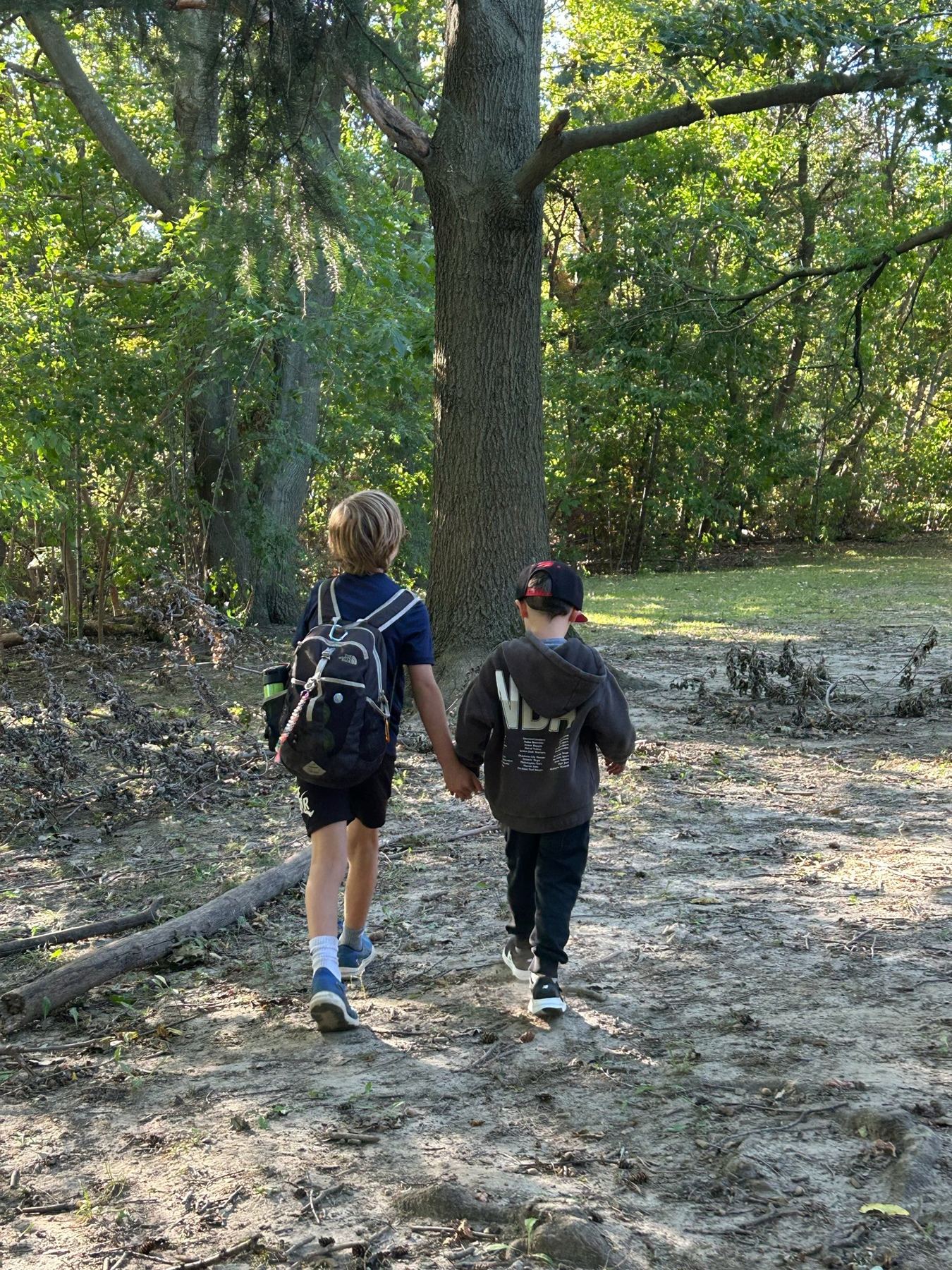

Relationship
Everything rests on relationship. Children thrive when they feel connected, capable and free to choose (Ryan & Deci, 2000), and when big feelings come up, we connect first and redirect after (Siegel & Bryson, 2011). From that steady ground, children feel safe enough to explore, hands in the dirt and all.
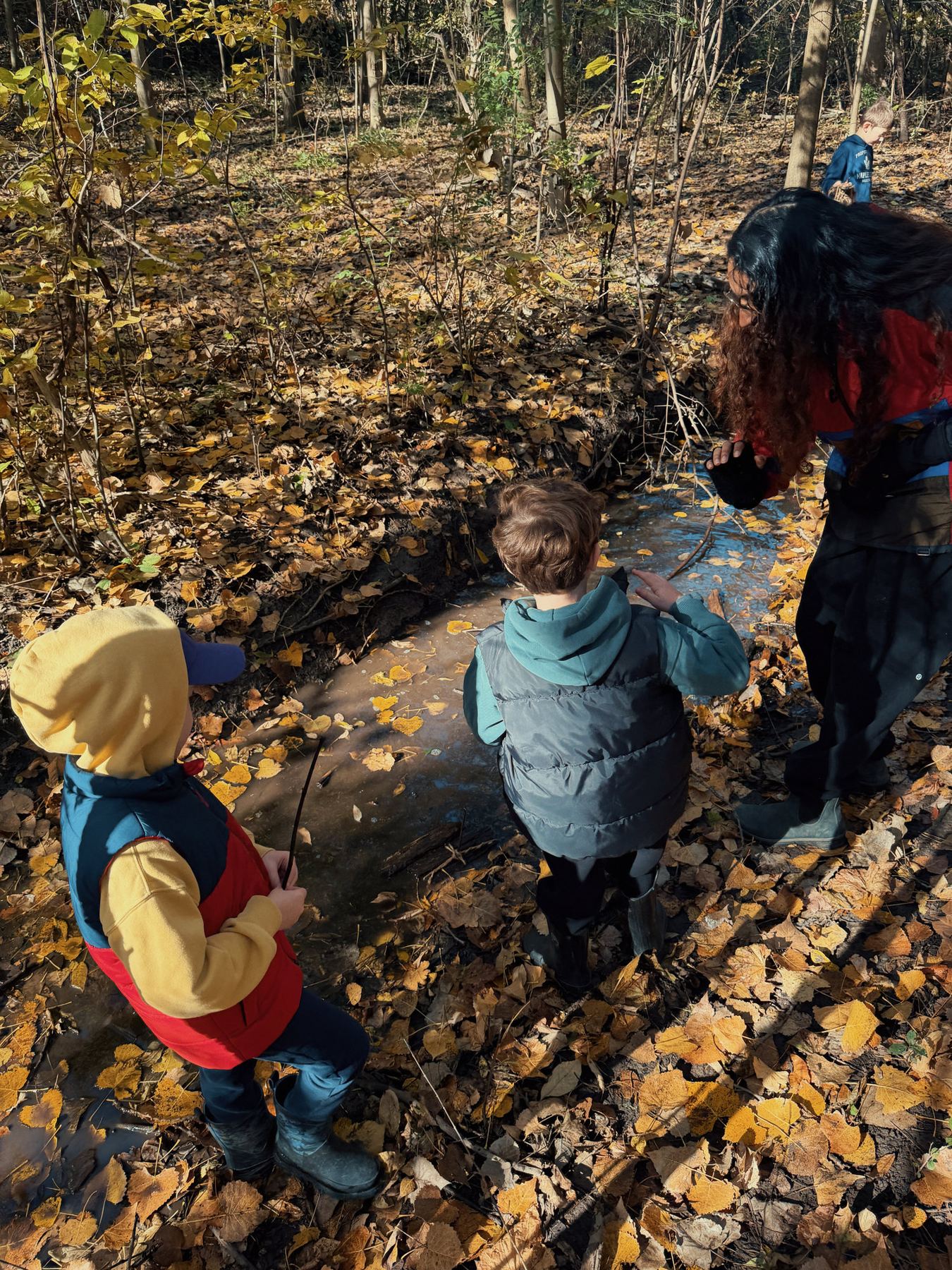

Play and the whole child
Curiosity moves like water. Self-directed play is a powerful way to learn (Gray, 2017), so we bring ideas and materials, then follow where the children take them, what researchers call guided play (Zosh et al., 2018). Bodies move freely too: children are more active outdoors (Tremblay et al., 2015), and forest play builds balance and coordination (Fjørtoft, 2001). We make room for the whole child: body, senses, feelings and ideas.
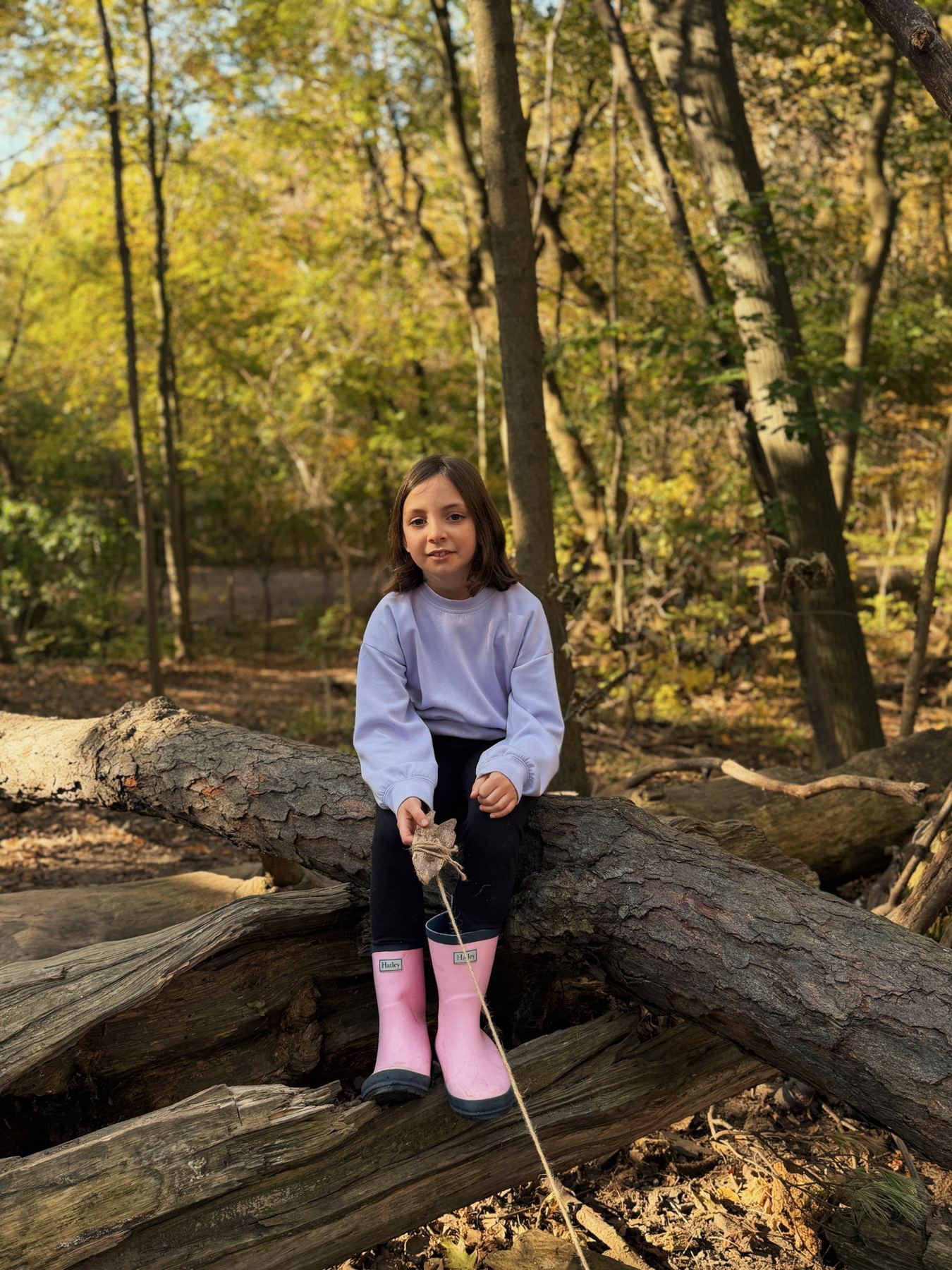

Risk, choice and agency
A log to balance on, a tree to climb. Risky outdoor play is linked to more physical activity and better social health (Brussoni et al., 2015), and the Canadian Paediatric Society encourages it (Beaulieu & Beno, 2024). Our educators are trained in risk assessment and in reading the environment. Within that, children learn to assess their own risks and make their own choices: How high feels right? Will this branch hold me? Each choice builds self-awareness, confidence and agency.
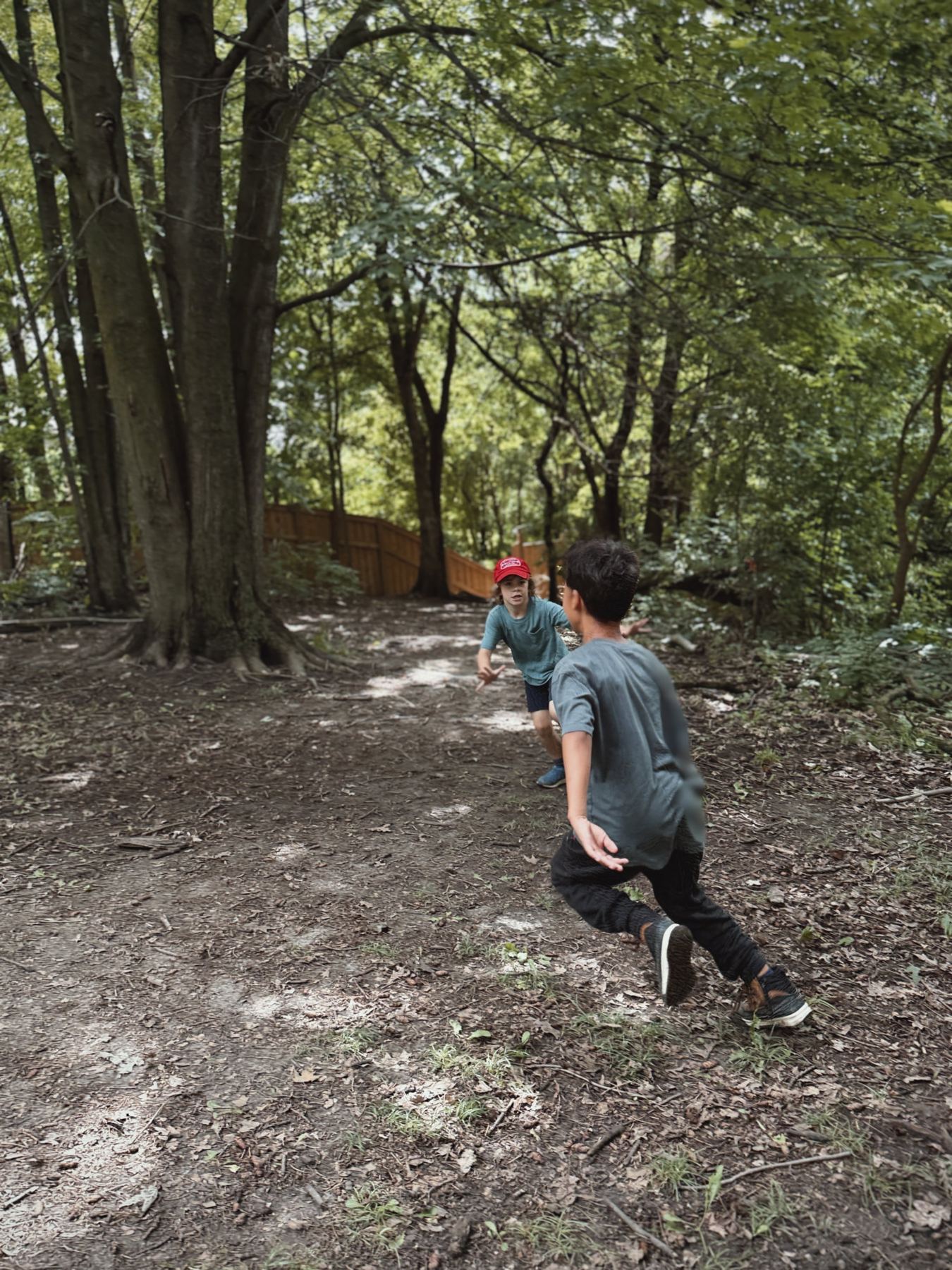

Space and each other
Indoors, the senses can get crowded. Classroom noise and echo make listening and learning harder, especially for children (Klatte, Bergström & Lachmann, 2013), and many classrooms are lit by fluorescent lamps with an invisible flicker that can cause headaches (Winterbottom & Wilkins, 2009). Outside there’s room to breathe: nature’s “soft fascination” lets a busy mind rest (Kaplan & Kaplan, 1989). There is room for each other too: in mixed-age play, younger children are supported and stretched by older ones, who practise care and leadership (Gray, 2011).

It’s all connected
Time in nature is linked to better attention, lower stress and better mental health (Kuo, Barnes & Jordan, 2019; Fyfe-Johnson et al., 2021), and children who spend time in nature tend to grow up caring for it (Chawla, 2020). So much grows when no one is rushing toward a result: the “flow” of being absorbed in something just challenging enough (Csikszentmihalyi, 1990), or sticks and stones that invite invention without a right answer (Nicholson, 1971). Like Gopnik’s (2016) gardener, we tend the conditions and let each child grow in their own way.
Educators who want to go deeper can explore Grounded.
Sources
- Beaulieu, E., & Beno, S. (2024). Healthy childhood development through outdoor risky play: Navigating the balance with injury prevention. Paediatrics & Child Health, 29(4), 255–261. Canadian Paediatric Society. https://cps.ca/en/documents/position/outdoor-risky-play
- Brussoni, M., Gibbons, R., Gray, C., Ishikawa, T., Sandseter, E. B. H., Bienenstock, A., Chabot, G., Fuselli, P., Herrington, S., Janssen, I., Pickett, W., Power, M., Stanger, N., Sampson, M., & Tremblay, M. S. (2015). What is the relationship between risky outdoor play and health in children? A systematic review. International Journal of Environmental Research and Public Health, 12(6), 6423–6454. https://doi.org/10.3390/ijerph120606423
- Chawla, L. (2020). Childhood nature connection and constructive hope: A review of research on connecting with nature and coping with environmental loss. People and Nature, 2(3), 619–642. https://doi.org/10.1002/pan3.10128
- Csikszentmihalyi, M. (1990). Flow: The psychology of optimal experience. Harper & Row. https://www.harpercollins.com/products/flow-mihaly-csikszentmihalyi?variant=32118048276514
- Fjørtoft, I. (2001). The natural environment as a playground for children: The impact of outdoor play activities in pre-primary school children. Early Childhood Education Journal, 29(2), 111–117. https://doi.org/10.1023/A:1012576913074
- Fyfe-Johnson, A. L., Hazlehurst, M. F., Perrins, S. P., Bratman, G. N., Thomas, R., Garrett, K. A., Hafferty, K. R., Cullaz, T. M., Marcuse, E. K., & Tandon, P. S. (2021). Nature and children’s health: A systematic review. Pediatrics, 148(4), e2020049155. https://doi.org/10.1542/peds.2020-049155
- Gopnik, A. (2016). The gardener and the carpenter: What the new science of child development tells us about the relationship between parents and children. Farrar, Straus and Giroux. https://us.macmillan.com/books/9780374229702/thegardenerandthecarpenter/
- Gray, P. (2011). The special value of children’s age-mixed play. American Journal of Play, 3(4), 500–522. https://www.museumofplay.org/app/uploads/2022/01/3-4-article-gray-age-mixed-play.pdf
- Gray, P. (2017). What exactly is play, and why is it such a powerful vehicle for learning? Topics in Language Disorders, 37(3), 217–228. https://doi.org/10.1097/TLD.0000000000000130
- Kaplan, R., & Kaplan, S. (1989). The experience of nature: A psychological perspective. Cambridge University Press. https://search.worldcat.org/title/18814094
- Klatte, M., Bergström, K., & Lachmann, T. (2013). Does noise affect learning? A short review on noise effects on cognitive performance in children. Frontiers in Psychology, 4, 578. https://www.frontiersin.org/journals/psychology/articles/10.3389/fpsyg.2013.00578/full
- Kuo, M., Barnes, M., & Jordan, C. (2019). Do experiences with nature promote learning? Converging evidence of a cause-and-effect relationship. Frontiers in Psychology, 10, 305. https://doi.org/10.3389/fpsyg.2019.00305
- Nicholson, S. (1971). How not to cheat children: The theory of loose parts. Landscape Architecture, 62(1), 30–34. https://cir.nii.ac.jp/crid/1572261550538538752
- Ryan, R. M., & Deci, E. L. (2000). Self-determination theory and the facilitation of intrinsic motivation, social development, and well-being. American Psychologist, 55(1), 68–78. https://doi.org/10.1037/0003-066X.55.1.68
- Siegel, D. J., & Bryson, T. P. (2011). The whole-brain child: 12 revolutionary strategies to nurture your child’s developing mind. Delacorte Press. https://www.penguinrandomhouse.com/books/200276/the-whole-brain-child-by-daniel-j-siegel-md-and-tina-payne-bryson-phd/9780553386691/
- Tremblay, M. S., Gray, C., Babcock, S., Barnes, J., Costas Bradstreet, C., Carr, D., Chabot, G., Choquette, L., Chorney, D., Collyer, C., Herrington, S., Janson, K., Janssen, I., Larouche, R., Pickett, W., Power, M., Sandseter, E. B. H., Simon, B., & Brussoni, M. (2015). Position statement on active outdoor play. International Journal of Environmental Research and Public Health, 12(6), 6475–6505. https://doi.org/10.3390/ijerph120606475
- Winterbottom, M., & Wilkins, A. (2009). Lighting and discomfort in the classroom. Journal of Environmental Psychology, 29(1), 63–75. https://doi.org/10.1016/j.jenvp.2008.11.007
- Zosh, J. M., Hirsh-Pasek, K., Hopkins, E. J., Jensen, H., Liu, C., Neale, D., Solis, S. L., & Whitebread, D. (2018). Accessing the inaccessible: Redefining play as a spectrum. Frontiers in Psychology, 9, 1124. https://doi.org/10.3389/fpsyg.2018.01124